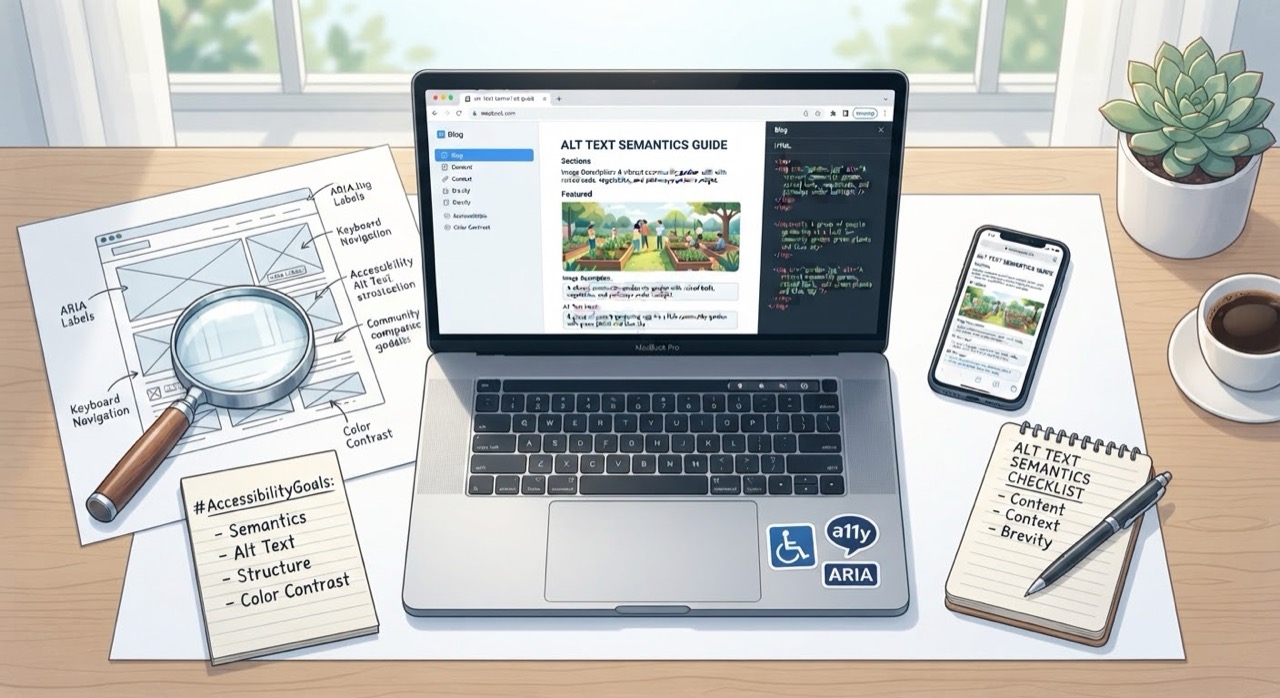
The Ultimate Guide to Alt Text for Images

Alt text serves two audiences at once: screen reader users who can’t see the image, and search engines that can’t “see” it either. Getting it right matters more than most people realize.
What alt text is for
The alt attribute describes an image’s content and function for anyone who can’t view it — whether that’s a visually impaired visitor using a screen reader, or a browser that fails to load the image at all.
Good vs. bad alt text
Bad: alt="image123.jpg" or alt="photo" — tells the reader nothing.
Also bad: alt="free stock photo image picture download beautiful nature landscape" — keyword stuffing that search engines actively penalize.
Good: alt="Hiker standing on a ridge overlooking a fog-filled valley at sunrise" — specific, descriptive, and written for a human first.
When to leave alt text empty
Purely decorative images — a background texture, a divider graphic — should use alt="" (empty, not omitted). This tells screen readers to skip the image entirely instead of announcing a meaningless filename.
Alt text for functional images
If an image is also a link or a button (like a logo linking home, or a search icon), the alt text should describe the action, not the image: alt="Go to homepage" rather than alt="Company logo".
Does alt text actually help SEO?
Yes, but indirectly. Search engines use alt text to understand image content for Image Search rankings, and well-described images contribute to a page’s overall topical relevance. It’s not a ranking hack — it’s a natural byproduct of describing your content properly.
For more on making your images work harder for both accessibility and search, browse our full Image SEO collection.